From $2,488Japan8 days 7 nightsDeparts Cebu (Mactan-Cebu International)Available now
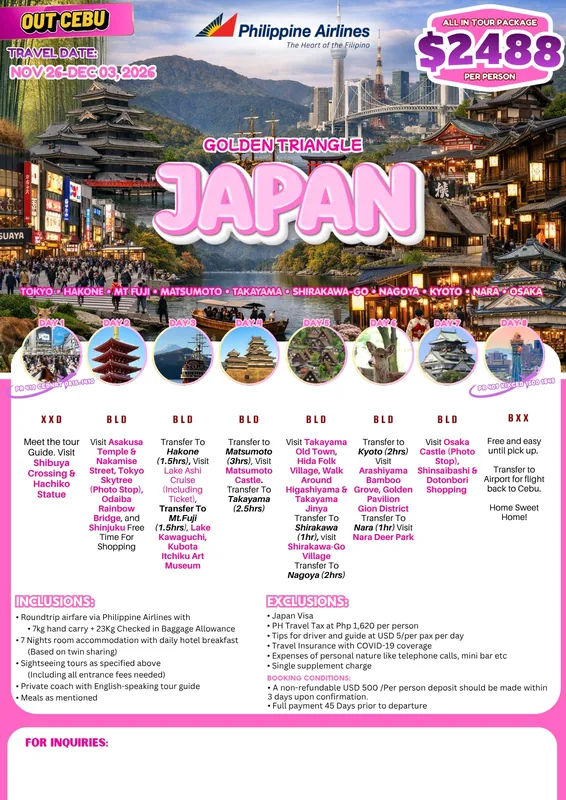
Tokyo – Mt. Fuji – Hakone – Matsumoto – Shirakawa-go – Osaka 8D7N Tour
Out Cebu · Philippine Airlines
Eight days across Japan from Tokyo to Osaka: Lake Ashi cruise, Mt. Fuji area, Matsumoto Castle, Takayama, Shirakawa-go, Kyoto and Nara.
Tap to enlarge
Tour dates
2026 · from Cebu
Departures from Cebu, Nov 26–Dec 3 2026 to Nov 26–Dec 3 2026. The rate changes by date: an amount on a date is added to the base rate per pax. Seats are limited and confirmed at booking.
Tap a date for a free quote. Your inquiry form opens with this package and the departure filled in. Orange dates add a peak-date surcharge per pax to the tour rate. Seats are confirmed at booking.
Quotation
per person
Tour rate
per pax
Adult & child with bedtwin sharing
$2,488
Child without bed (2–5 yrs)does not include hotel breakfast, payable on site
$2,388
Infant (estimated)
$300
Not in the tour rate
per pax
Tips for driver and guideUSD 40 per person (collected with the tour fee)
USD 40
Philippine travel taxPHP 1,620 per person
PHP 1,620
About this package
8 days 7 nights
A one-way journey across central Japan, flying Philippine Airlines into Tokyo and home from Osaka. See Tokyo, take a Lake Ashi cruise in Hakone, visit Lake Kawaguchi and the Kubota Itchiku Art Museum, Matsumoto Castle, Takayama Old Town, Shirakawa-go village, Kyoto’s Arashiyama and Golden Pavilion, Nara Deer Park and Osaka Castle. Seven nights in 3-star hotels with an English-speaking guide.
Airfare
Hotel
Meals
Transport
Tour guide
Entrance fees
Sightseeing
Baggage
Duration
8 days 7 nights
Departure
Cebu (Mactan-Cebu International)
Flight
Philippine Airlines
Baggage
23 kg + 7 kg carry-on
Hotels
7 nights 3★ hotels
Meals
Daily breakfast + 13 meals
Transport
Private coach
Guide
English-speaking
Your route
CebuDay 1
1TokyoAsakusa
2HakoneLake Ashi
3Mt. FujiLake Kawaguchi
4TakayamaShirakawa-go
5KyotoGolden Pavilion
6Nara / OsakaDotonbori
CebuDay 8
OutboundCEB NRT
PR 410 08:15–14:10 local time
ReturnKIX CEB
PR 409 15:00–18:45 local time
Travel dates Nov 26 – Dec 3, 2026. Flight times are confirmed with your booking. +1 = arrives the next day.
Day-by-day itinerary
8 days 7 nights
DayCityItineraryMeals & hotel
Day01
Cebu – Narita – TokyoAIR / BUS
Cebu – Tokyo
PR 410 CEB – NRT 08:15–14:10
Flight PR 410 Cebu – Narita, 08:15–14:10.
Meet the English-speaking guide at Narita International Airport.
Visit Shibuya Crossing and Hachiko Statue.
Transfer to hotel and check in.
3★ hotel(Tokyo)or similar ★★★
BBreakfast not included.LLunch not included.DDinner included.
BBreakfast included.LLunch not included.DDinner not included.
Meals: B breakfast · L lunch · D dinner · crossed out = not included. Orange = sightseeing stop · bold = shop visit included in the tour.
What’s covered
Inclusions
7 nights’ hotel accommodation, twin sharing, with daily hotel breakfast
Sightseeing tours as specified, with all entrance fees needed
Private coach with English-speaking tour guide
Meals as listed
Lake Ashi cruise ticket
Round-trip airfare via Philippine Airlines with 7 kg hand carry and 23 kg checked baggage
Exclusions
Personal expenses such as telephone calls, minibar, etc.
Tips for driver and guide: USD 40 per person (collected with the tour fee)
Philippine travel tax: PHP 1,620 per person
Single supplement
Travel insurance
Extra baggage allowance
Japan visa
Hotels
or similar
Day 1–7: 3★ hotels or similar (Tokyo, Mt. Fuji area, Takayama, Nagoya, Kyoto/Nara area, Osaka)
Important notice
please read
All services are on a private basis.
In case of crowded groups or special circumstances, the order of attractions will be adjusted without prior notice to keep the travel time.
All rooms are based on twin sharing by default. A triple room is not guaranteed; if unavailable, the traveller shares with another guest or pays the single supplement.
If the hotels above are not available at your requested time, they will be replaced by similar ones.
Tour duration is at most 10 hours a day, including travel time (not later than 21:00 each day).
The rate for a child without bed does not include hotel breakfast, which can be paid on site.
Private tour basis: private coach with English-speaking guide.
Tour order of attractions may be adjusted without notice in case of crowds or special circumstances.
Maximum 10 hours of touring per day, including travel time.
Single supplement USD 650 per person; infant fee about USD 300 per person.
Tips for guide and driver USD 5 per person per day x 8 days = USD 40 per person, collected with the tour fee.
Philippine travel tax PHP 1,620 per person is not included.
Baggage: 7 kg hand carry and 23 kg checked baggage included; extra baggage is not included.
Tour day ends no later than 21:00.
Only one departure listed: Nov 26 – Dec 3.
Where you’ll go
19 stops
1
Shibuya Crossing
The famous busy pedestrian scramble crossing in front of Shibuya Station.
2
Hachiko Statue
A bronze statue of the loyal dog Hachiko outside Shibuya Station, a popular meeting spot.
3
Asakusa Temple
Sensoji, Tokyo's oldest temple, reached through the Kaminarimon gate and Nakamise shopping street.
4
Tokyo Skytree
Tokyo's tall broadcasting tower near Asakusa, seen here on a photo stop.
5
Odaiba Rainbow Bridge
A suspension bridge over Tokyo Bay, with views of the Odaiba waterfront.
6
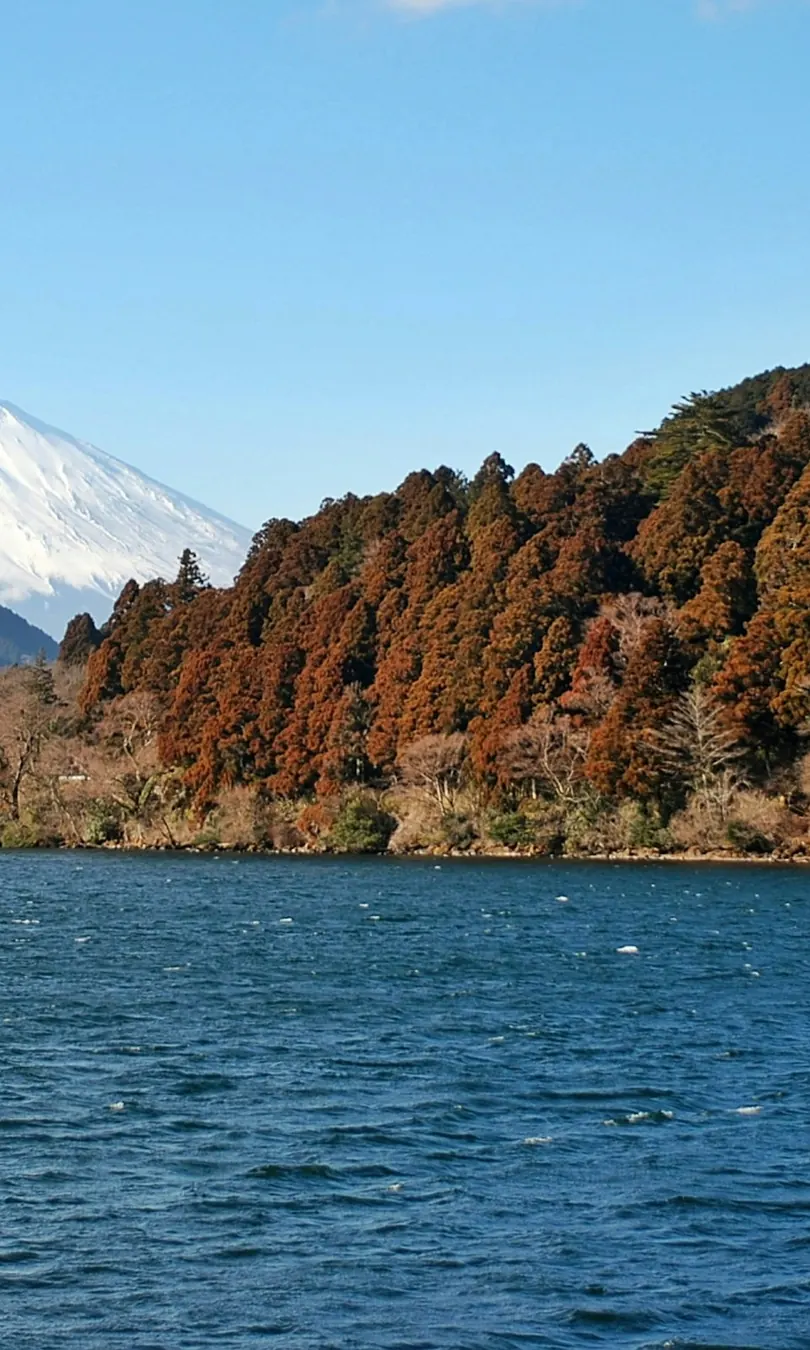
Lake Ashi
A scenic crater lake in Hakone with views of Mt. Fuji on clear days, crossed on a cruise.
7
Lake Kawaguchi
One of the Fuji Five Lakes, famed for reflections and views of Mt. Fuji.
8
Kubota Itchiku Art Museum
A museum by Lake Kawaguchi showing the kimono art of Itchiku Kubota, in a garden setting.
9
Matsumoto Castle
One of Japan's best-preserved original castles, known as the Crow Castle for its black walls.
10
Takayama Old Town
A well-preserved old merchant district of Takayama with wooden houses, sake breweries and shops.
11
Hida Folk Village
An open-air museum near Takayama of old thatched-roof farmhouses moved from the Hida region.
12
Shirakawa-go
A UNESCO World Heritage village of steep-roofed gassho-zukuri farmhouses in the mountains.
13
Arashiyama Bamboo Grove
A path through tall bamboo in Kyoto's Arashiyama district, one of the city's most photographed spots.
14
Golden Pavilion
Kinkaku-ji, Kyoto's Zen temple covered in gold leaf and reflected in its pond.
15
Gion District
Kyoto's historic geisha district of wooden teahouses and lantern-lit lanes.
16
Nara Deer Park
A park in Nara where friendly free-roaming deer live near Todai-ji and other temples.
17
Osaka Castle
A landmark castle in Osaka with a white tower and stone-walled moats, seen on a photo stop.
18
Shinsaibashi
Osaka's long covered shopping arcade with department stores, boutiques and shops.
19
Dotonbori
Osaka's neon-lit canal-side entertainment and food street, famous for street food.
Know before you go
Japan tips
Practical tips for Japan, from entry rules to what to eat. General guidance for a Philippine traveller — rules and prices change, so confirm the latest before you fly. Need a hand with the visa or tickets? Our team is glad to help.
Entry requirements
Tourist visa required
Philippine passport holders need a Japan short-stay tourist visa before travel — our ticketing desk can guide you through the documents. Passport valid for the whole stay. No vaccinations are required.
Money
Yen (¥); carry cash
Cards are widely accepted, but Japan still loves cash — keep some for small shops, shrines and buses. Get a Suica or Pasmo IC card for trains and convenience stores. Do NOT tip; it can cause confusion. Budget roughly ₱3,000–5,000 a day for meals and extras.
Weather & what to pack
Cool at Mt. Fuji; check your month
Tokyo is mild in spring and autumn, hot and humid in summer, and cold in winter; Mt. Fuji’s fifth station is always chilly and windy. Bring layers, a warm jacket for Fuji, comfy walking shoes and a compact umbrella.
Getting around
Trains run on time
Japan’s trains and subways are punctual and reach everything; tap in with a Suica or Pasmo card. Google Maps gives exact platforms and times. Your package includes airport transfers and coach transport on tour days.
Language
Japanese; some English
City signs are bilingual and staff are helpful, though spoken English is limited. Useful words: Konnichiwa (hello), Arigatō (thank you), Sumimasen (excuse me). Google Translate’s camera reads menus for you.
Culture & etiquette
Quiet and orderly
Keep phone calls off the trains, avoid eating while walking, queue neatly and take your rubbish with you. Remove shoes where indicated, bow slightly in greeting, and never tip — a little politeness is deeply appreciated.
Safety & health
Among the world’s safest
Crime is extremely low and lost items are often handed in. Tap water is safe to drink. Emergencies: police 110, ambulance and fire 119. Carry your passport, as it is your official ID while in Japan.
Connectivity
Pocket Wi-Fi or eSIM
Rent a pocket Wi-Fi or buy a Japan eSIM for reliable data; free Wi-Fi exists but is patchy. Handy apps: Google Maps, Google Translate, Japan Travel by Navitime, and your Suica in Apple or Google Wallet.
Must-see sights & food
Mt. Fuji, Shibuya, sushi
See Mt. Fuji and Lake Kawaguchi, Tokyo’s Sensō-ji temple, the Shibuya crossing and Yokohama’s bay. Eat sushi, ramen, tempura and okonomiyaki — and grab snacks from any convenience store.
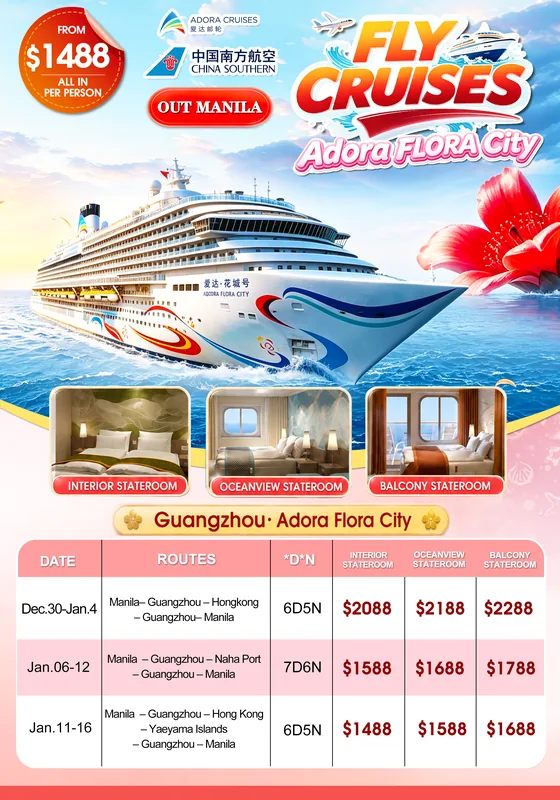
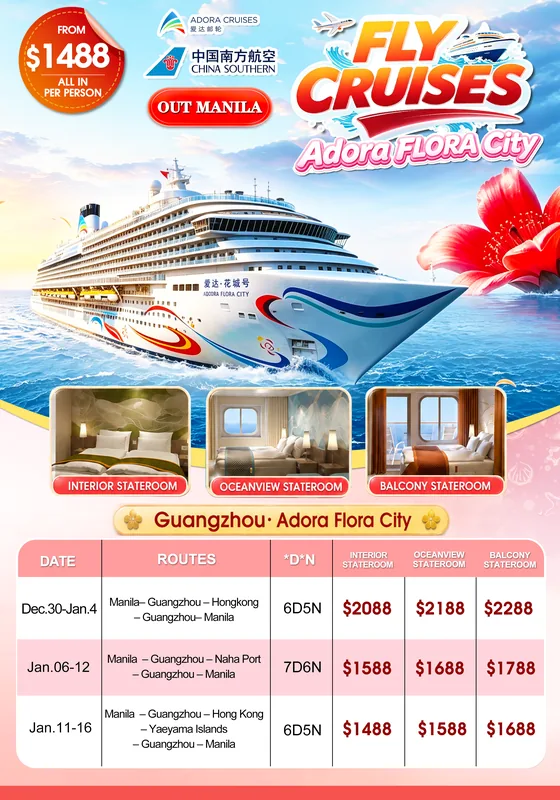
Fly Manila to Guangzhou, cruise on the Adora Flora City to Naha, Okinawa with an overnight call, then a Guangzhou hotel night before flying home to Manila.
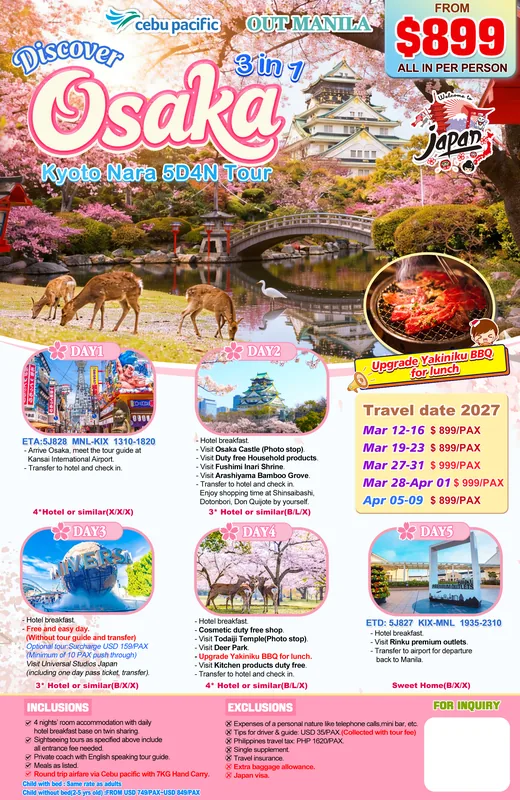
Five days in Japan’s Kansai region: Osaka Castle, Fushimi Inari, Arashiyama Bamboo Grove, Todaiji and the Nara deer, a free day, and Rinku Premium Outlets.

 Japan